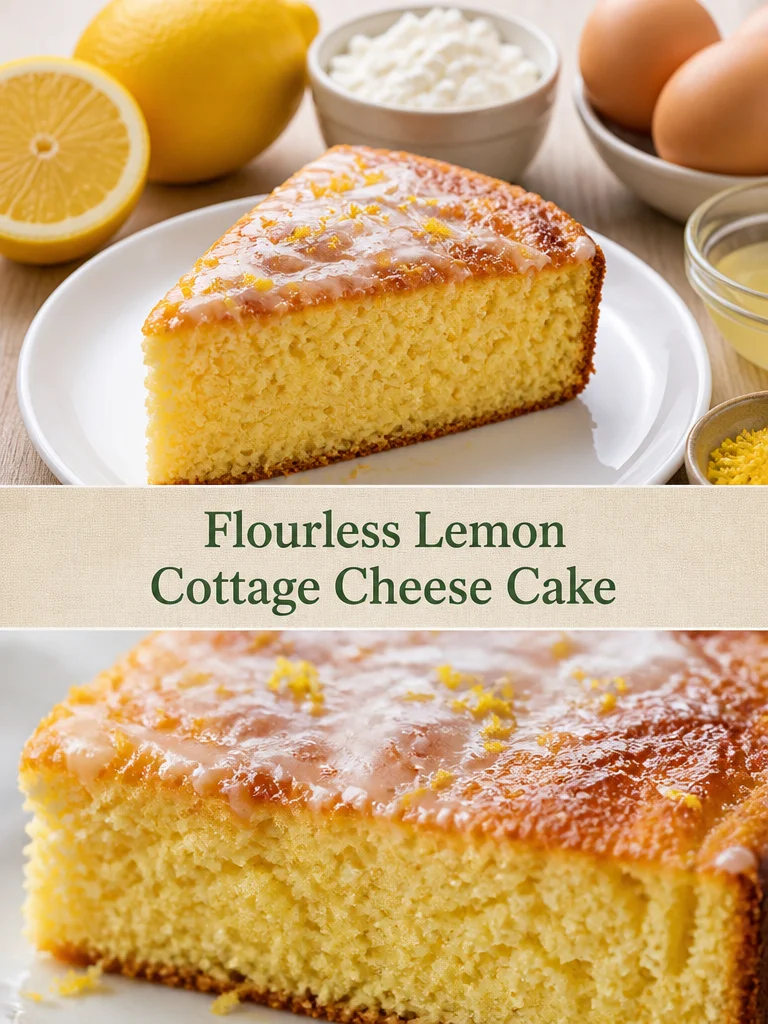
I love making this flourless lemon cottage cheese cake when I want something bright, creamy, and a little lighter than a traditional dessert. It has the sunny flavor you expect from lemon cheesecake, but the texture is more delicate and protein-rich, which makes it feel a little more everyday-friendly. If you enjoy easy lemon bakes like this lemon cream cheese dump cake, this one gives you another simple citrus dessert to keep in rotation.
Why you’ll love this dish
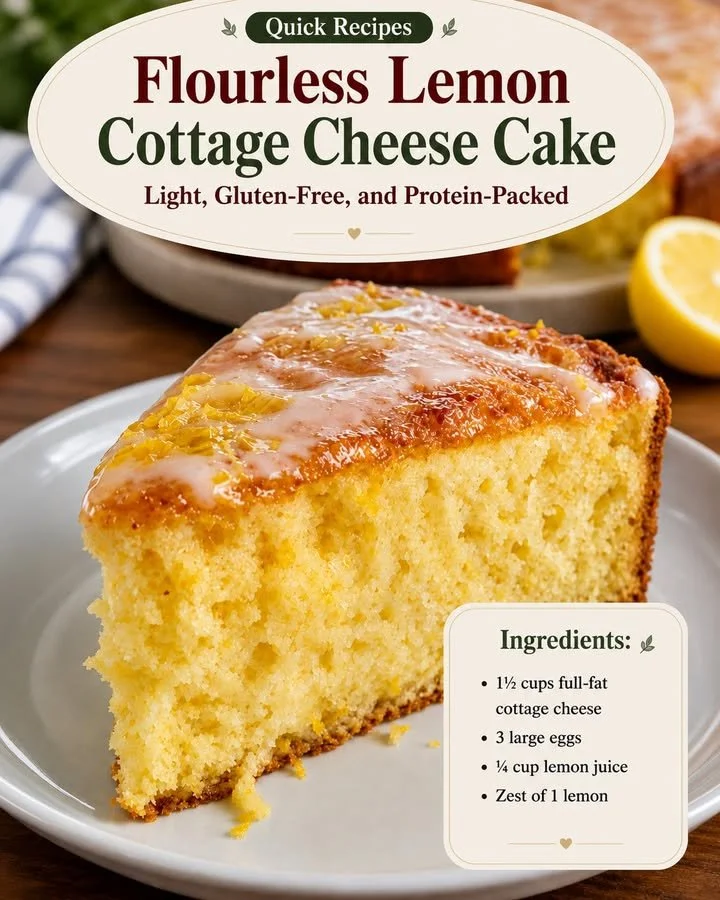
This cake checks a lot of boxes: it’s fast to mix, naturally flourless, and uses ingredients many people already keep on hand. The cottage cheese blends into a smooth, custardy base, while the lemon juice and zest give it a clean, fresh flavor that keeps it from feeling too heavy.
It’s also the kind of recipe that works for more than one occasion. I’ve made it for casual weeknight desserts, brunch tables, and make-ahead treats when I wanted something sweet but not overly rich. If you’re looking for a lighter lemon option with a creamy finish, you may also like another easy lemon cream cheese dessert for comparison.
“This is the kind of dessert that surprises people—in the best way. It tastes bright and creamy, bakes up beautifully, and feels special without requiring much effort.”
How this recipe comes together
The method is wonderfully simple. First, you warm the oven and prepare the cake pan so the batter goes straight in once it’s blended. Then everything gets mixed in one bowl until smooth, which is where the cottage cheese really works its magic. After that, the batter bakes until the top turns lightly golden and the center is set. The final step matters just as much as the baking: let it cool so the texture firms up and slices cleanly.
{image_template}
Ingredients
What you’ll need
- 1.5 cups full-fat cottage cheese
- 3 large eggs
- 1/4 cup lemon juice
- Zest of 1 lemon
- 1/4 cup low-carb sweetener, such as monk fruit or erythritol
- 1 tsp vanilla extract
- 1 tsp baking powder
A few notes: full-fat cottage cheese gives the best creamy texture, and blending the batter well helps remove most of the curd-like texture. If you prefer a sweeter dessert, you can slightly increase the sweetener to taste before baking.
Directions
Step-by-step instructions
- Preheat the oven to 350°F (175°C). Grease a cake pan well.
- Add the cottage cheese, eggs, lemon juice, lemon zest, sweetener, vanilla extract, and baking powder to a mixing bowl.
- Blend or mix until the batter looks as smooth as possible.
- Pour the mixture into the prepared cake pan.
- Bake for 30 to 35 minutes, or until the cake is set and lightly golden on top.
- Let it cool before slicing and serving.
Best ways to enjoy it
This cake is lovely on its own, but a few simple toppings can make it feel more finished. A spoonful of whipped cream, a dusting of powdered sweetener, or a scattering of fresh berries all work beautifully. For a brunch-style presentation, serve it with raspberries and mint. For dessert, add a dollop of Greek yogurt or a spoon of lemon curd if you want a sharper citrus pop.
It also pairs well with coffee or tea because the flavor is bright without being overly sugary. If you’re serving it after dinner, keep the slices small and elegant; the texture is rich enough that a little goes a long way.
Storage and reheating tips
Store leftovers in an airtight container in the refrigerator once the cake has fully cooled. It keeps best for 3 to 4 days. For food safety, don’t leave it sitting at room temperature for more than about 2 hours.
You can enjoy it cold straight from the fridge, or let a slice sit out for 10 to 15 minutes to soften slightly. I don’t recommend microwaving it for long, since too much heat can make the texture watery. Freezing is possible, but the texture may change a bit after thawing, so it’s best for longer storage rather than the ideal finish.
Helpful cooking tips
A smooth batter makes the biggest difference here. If your cottage cheese has larger curds, blend it first with the eggs and lemon juice before adding the rest. That helps create a more even, cheesecake-like texture.
Also, watch the bake time closely near the end. The cake should be set in the center with just a little jiggle, not wet or liquid. If you overbake it, the texture can turn dry. Letting it cool fully is just as important as baking it properly, because it continues to firm up as it rests.
Flavor variations
You can change the flavor profile without changing the core method. Add a little extra lemon zest for a stronger citrus punch, or mix in a teaspoon of almond extract for a softer, bakery-style note. A few fresh blueberries folded into the batter can also be a nice variation, though they may add a little extra moisture.
For toppings, try toasted coconut, sliced strawberries, or a sugar-free berry compote. If you want a more dessert-like finish, a thin glaze made with lemon juice and powdered sweetener is a simple upgrade.
Common questions
Can I use low-fat cottage cheese instead of full-fat?
Yes, but the texture will be less creamy and slightly less rich. Full-fat cottage cheese gives the best result for this recipe.
Do I need to blend the batter?
Blending is strongly recommended. It helps smooth out the cottage cheese and gives the cake a more even texture.
How do I know when the cake is done?
The top should look lightly golden, and the center should be set with a slight wobble. If the middle still looks wet, give it a few more minutes.
Can I make this ahead of time?
Yes. In fact, it works well as a make-ahead dessert because the texture improves after it has cooled completely.
Conclusion
This flourless lemon cottage cheese cake is proof that simple ingredients can make a dessert that feels fresh, light, and satisfying. If you like experimenting with easy lemon cakes, the version from The Modern Nonna’s lemon cottage cheese cake is another helpful reference to explore.