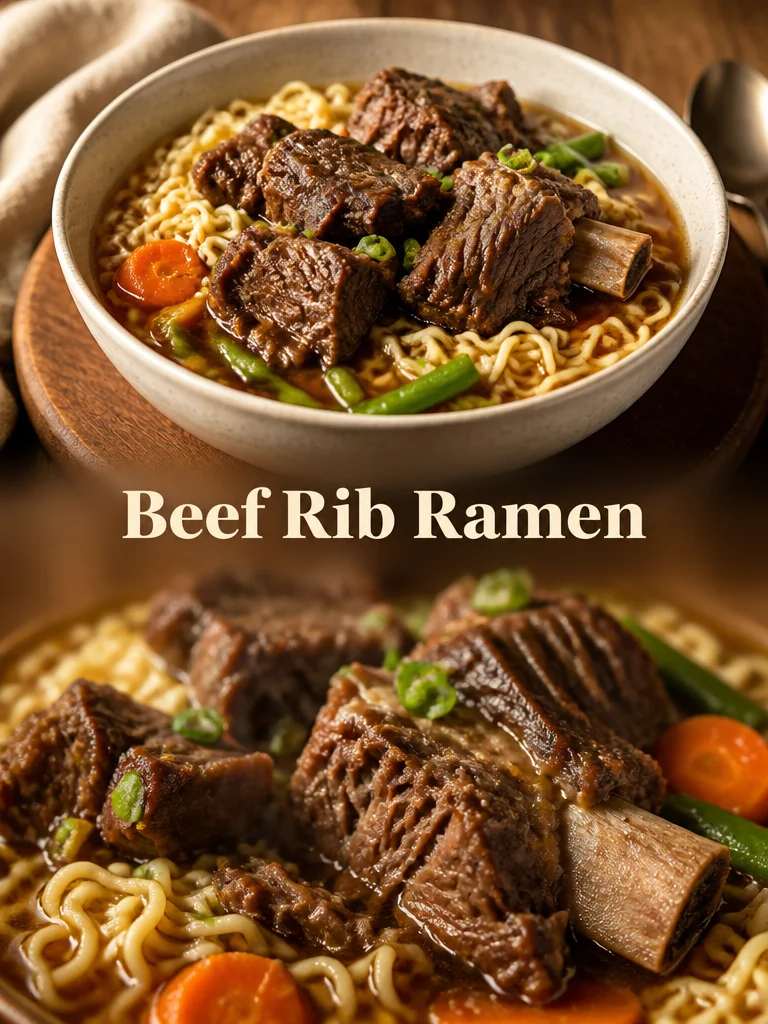
I still remember the first time I simmered beef ribs until they nearly fell off the bone and ladled that rich, glossy broth over chewy ramen. It felt like a restaurant bowl made in my own kitchen — deep beef flavor, silky noodles, and all the comfort of a slow-cooked stew in a single slurpable bowl. This beef rib ramen is ideal when you want something impressive but hands-off: long cook time, minimal babysitting, and maximum payoff.
Why you’ll love this dish
This recipe takes the soul of braised beef ribs and translates it into a ramen bowl: the collagen-rich broth, tender shredded meat, soft-boiled eggs, and vibrant greens make every spoonful layered and satisfying. It’s perfect for weekend meal prep, a chilly weeknight when you crave comfort, or as a show-stopping dinner for friends who love big flavors.
“The broth felt like it had been simmering for a day — deep, glossy, and umami-packed. The shredded ribs turned the ramen into a meal you can’t stop eating.” — home cook review
Benefits at a glance:
- Deep, beefy flavor from long-simmered ribs.
- Versatile: scale up for guests or split into portions for lunches.
- Kid-friendly with easy veggie add-ins (corn, bok choy).
- Makes an excellent freezer meal or leftovers-ready dinner.
The cooking process explained
This recipe follows a clear, fail-safe flow so you know what to expect:
- Build flavor by sautéing aromatics (garlic, ginger) and searing the ribs.
- Simmer ribs low and slow in beef broth with soy and mirin until fork-tender (2–3 hours).
- Remove, shred the meat, and strain the broth for a clean, concentrated soup base.
- Cook noodles separately so they stay springy.
- Reassemble bowls with hot broth, noodles, shredded beef, soft-boiled eggs, scallions, and vegetables.
{image_template}
Gather these items
- Beef ribs (2–3 lb; short ribs or flanken work well; bone-in gives more flavor)
- Ramen noodles (fresh or dried)
- Beef broth (about 8 cups; use low-sodium if you plan to adjust salt)
- Soy sauce (2–4 tbsp; low-sodium optional)
- Mirin (2 tbsp; substitute: 1 tbsp sake + 1 tsp sugar or a splash of rice vinegar + a pinch of sugar)
- Garlic (4–6 cloves, smashed)
- Fresh ginger (1–2 inches, sliced or smashed)
- Scallions (2–3, sliced for garnish)
- Eggs (for soft-boiled ramen eggs; see tips)
- Vegetables: bok choy, shiitake or cremini mushrooms, sweet corn — your choice
- Optional: kombu or dried bonito flakes for extra umami; sesame oil; chili oil
Notes:
- If you prefer a quicker route, use beef shank or chuck and pressure-cook (see Variations).
- Mirin adds sweetness and shine; omit if you don’t have it, but balance with a little sugar.
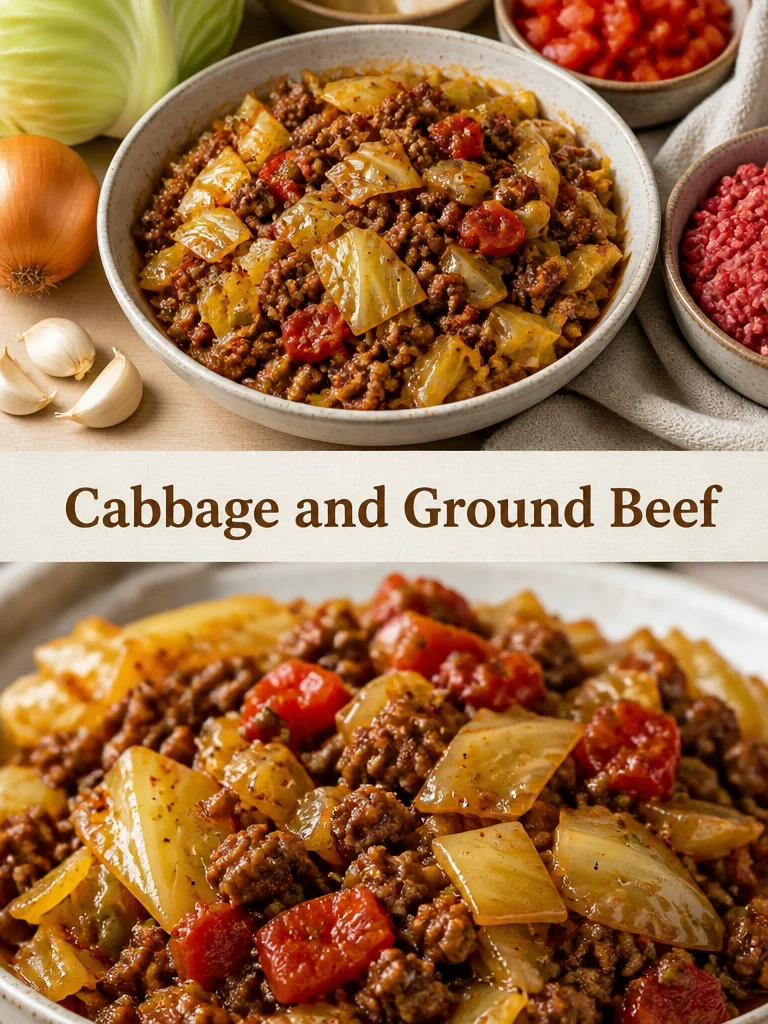
{image_2}
Step-by-step instructions
- Heat a heavy pot over medium-high heat. Add a splash of oil. Sauté the smashed garlic and sliced ginger until fragrant, about 30–60 seconds.
- Increase heat to high. Add beef ribs and sear on all sides until browned. Don’t overcrowd the pot; work in batches if needed.
- Pour in beef broth, soy sauce, and mirin. Bring the liquid to a simmer and skim any foam or excess fat on top.
- Reduce heat to low. Cover partially and simmer gently until the ribs are very tender, about 2–3 hours. Alternatively, cook in a low oven at 300°F for the same time.
- Remove the ribs from the broth. Let cool slightly, then shred the meat with two forks. Discard large bones and excess fat.
- Strain the broth through a fine sieve or cheesecloth into a clean pot. Taste and adjust seasoning with soy or a pinch of salt. If you want a richer broth, simmer uncovered to reduce and concentrate flavors.
- In a separate pot, cook the ramen noodles according to package instructions. Drain and set aside (reserve a splash of noodle water if you like a looser broth).
- Return the strained broth to a gentle simmer. Add shredded beef back to the broth to reheat briefly.
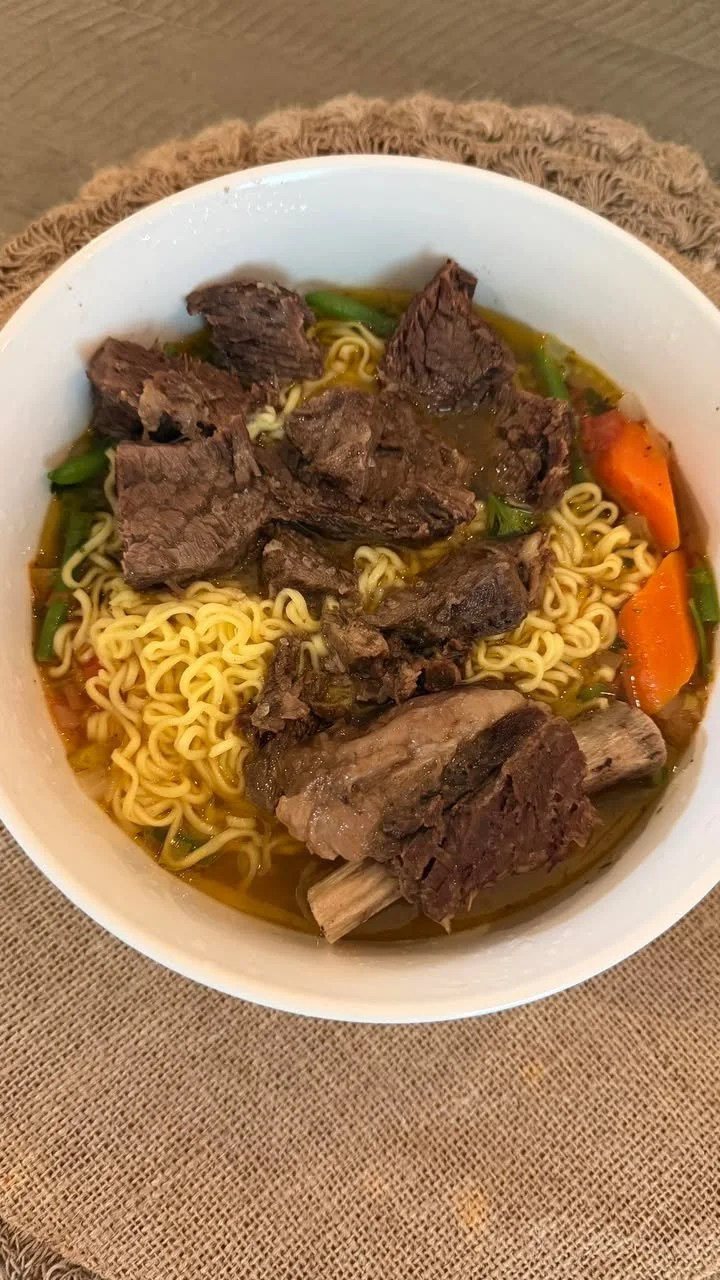
- Divide cooked noodles among bowls. Ladle hot broth and beef over the noodles. Top with sliced scallions, soft-boiled eggs, bok choy, mushrooms, corn, a drizzle of sesame oil or chili oil, and any extra tare (seasoning sauce) you like. Serve hot.
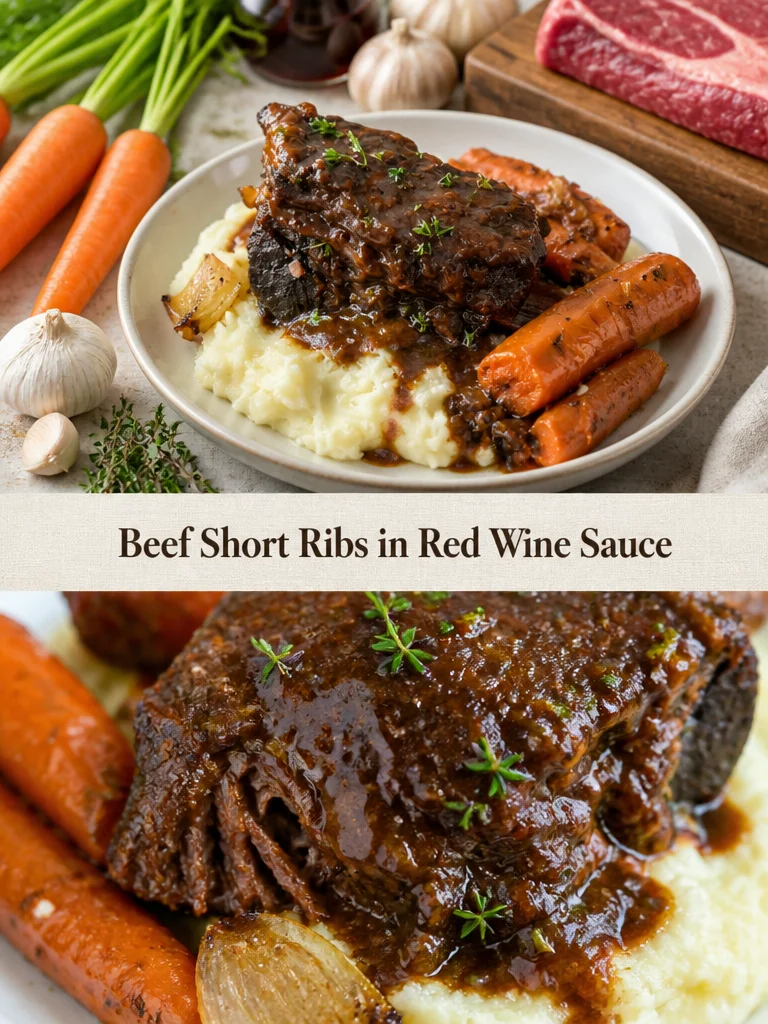
{image_1}
Best ways to enjoy it
- Plating: Use deep ramen bowls. Nestle noodles in the center, pour broth around them, then pile shredded beef on one side and a halved soft-boiled egg on the other.
- Garnishes: Add toasted sesame seeds, nori strips, pickled ginger, or a small spoon of miso or tare to customize the bowl.
- Sides & pairings: Serve with gyoza, cucumber sunomono (vinegar salad), or a small kimchi side. Drink pairings include a crisp lager, chilled sake, or green tea.
Storage and reheating tips
- Refrigerate: Store broth and shredded beef together or separately in airtight containers for up to 3–4 days. Keep cooked noodles separate if possible to avoid sogginess.
- Freeze: Broth and beef freeze well for up to 2–3 months. Defrost in the fridge overnight before reheating.
- Reheating: Bring broth to a simmer and heat until steaming hot. Reheat meat in the broth until warmed through. Reheat noodles briefly in boiling water (30–60 seconds) to revive texture. Always reheat to at least 165°F (74°C) for safety.
- Food safety: Cool large batches quickly by dividing into shallow containers before refrigerating. Don’t leave cooked broth at room temperature for more than 2 hours.
Pro chef tips
- Sear for flavor: Browning the ribs creates Maillard flavor that deepens the broth. Don’t skip it.
- Skim the fat: Early skimming keeps your broth clear. For an even cleaner result, chill the broth and remove the solidified fat before reheating.
- Add umami boosters: A strip of kombu added at the start (removed before simmering) or a handful of dried shiitake will amplify savory notes.
- Control noodle texture: Cook noodles to just al dente and rinse briefly under hot water if using fresh ones to stop carryover cooking.
- Egg trick: For jammy ramen eggs, boil 6–7 minutes, shock in ice water for 5 minutes, then peel and marinate in a 1:1 mix of soy and mirin (or leftover broth) for at least 2 hours.
- Time-savers: Use an Instant Pot: pressure cook seared ribs with broth on high for 45–60 minutes, then natural release for 15 minutes.
Creative twists
- Instant-Pot beef rib ramen: Sear, then pressure-cook ribs 45–60 minutes for a fraction of the stove time.
- Miso-style: Stir 1–2 tbsp red or white miso into the strained broth off heat for a richer, slightly tangy bowl.
- Spicy beef rib ramen: Add gochujang or chili oil to taste and top with toasted chili flakes or togarashi.
- Lighter/vegetarian spin: Swap beef broth and ribs for a robust mushroom-kombu broth and add marinated tofu instead of beef.
- Asian fusion: Finish with a spoonful of hoisin or a splash of lime for Southeast Asian brightness.
- Short ribs vs. beef ribs: Short ribs are fattier and silkier; beef back ribs give a lighter, beefier flavor. Both work; choose based on preference.
Your questions answered
Q: How long does this beef rib ramen take from start to finish?
A: Active hands-on time is roughly 30–45 minutes (searing, prep, boiling eggs). Simmer time for ribs is 2–3 hours on the stove. Pressure-cooker versions cut the long simmer to about 60–90 minutes total.
Q: Can I make this in a slow cooker or Instant Pot?
A: Yes. Slow cooker: sear ribs first, then cook on low 6–8 hours. Instant Pot: use high pressure for 45–60 minutes, then natural release 10–15 minutes. Always skim excess fat after cooking.
Q: How do I keep noodles from getting mushy when reheating leftovers?
A: Store noodles separately. When ready to eat, reheat broth to a simmer and dip the noodles in boiling water for 30–60 seconds, or briefly warm them in the microwave then combine.
Q: What if I don’t have mirin or sake?
A: Substitute with 1 tsp sugar plus a teaspoon of rice vinegar, or use a splash of white wine and a pinch of sugar. Mirin’s sweetness balances the soy; taste and adjust.
Q: How long do ramen eggs last in the fridge?
A: Marinated ramen eggs (ajitsuke tamago) keep 3–4 days in the refrigerator. They’re best within 48 hours for flavor.
Q: Is this recipe freezer-friendly?
A: Yes. Freeze strained broth and shredded beef in portions for up to 2–3 months. Thaw overnight in the fridge before reheating.
If you want, I can format this into a printable recipe card, add exact ingredient quantities (weights/volumes), or provide Instant Pot and slow-cooker step-by-step times. Which would help you most?