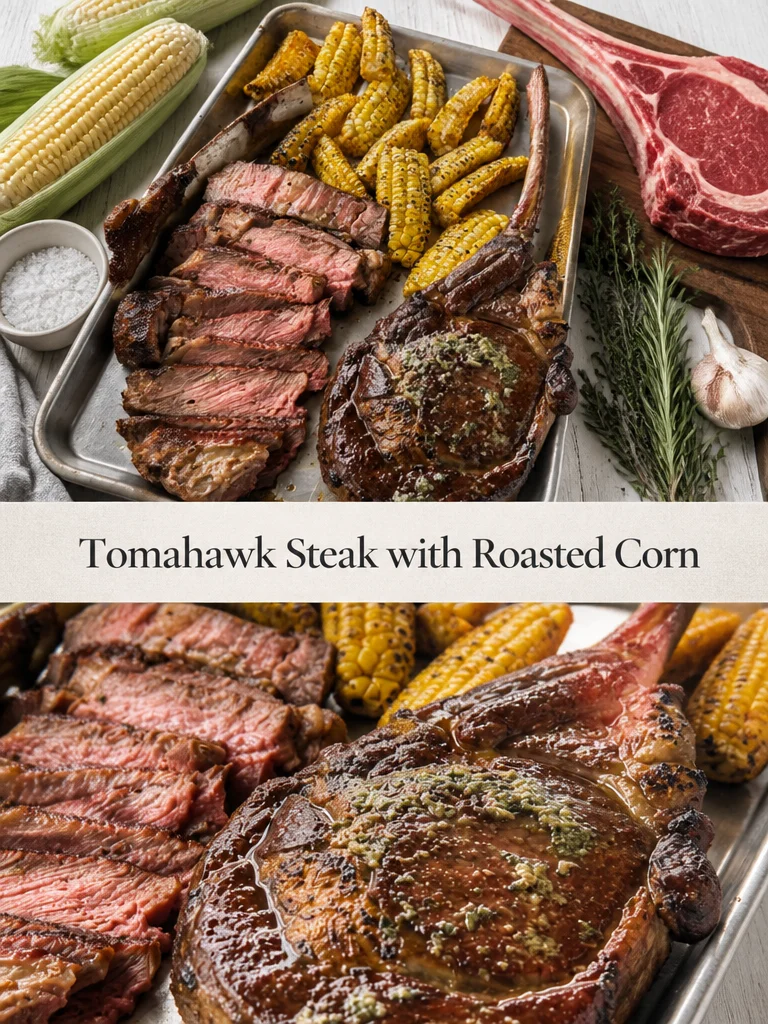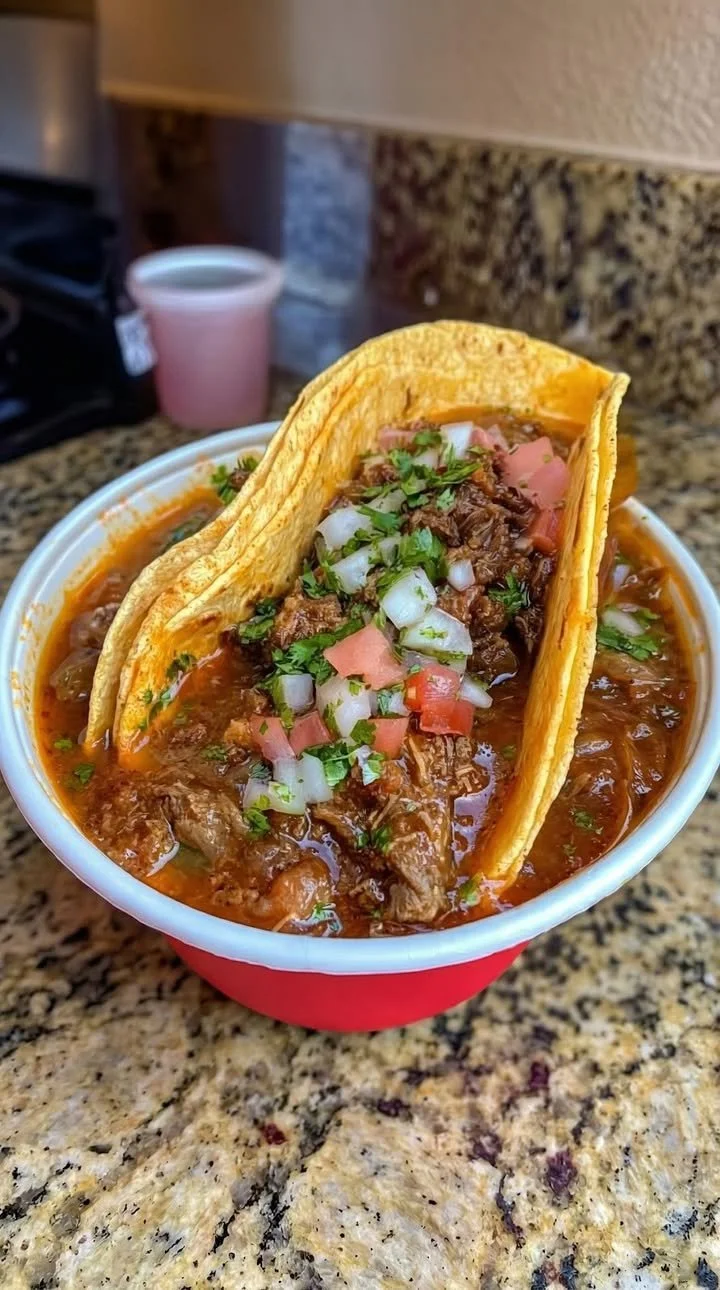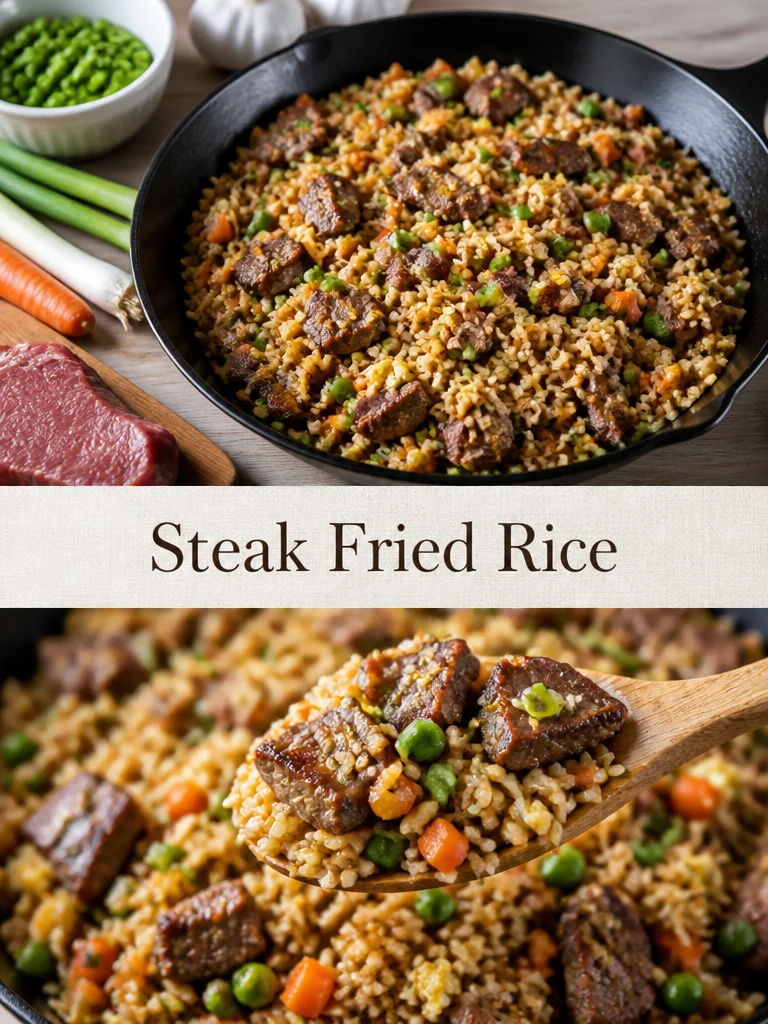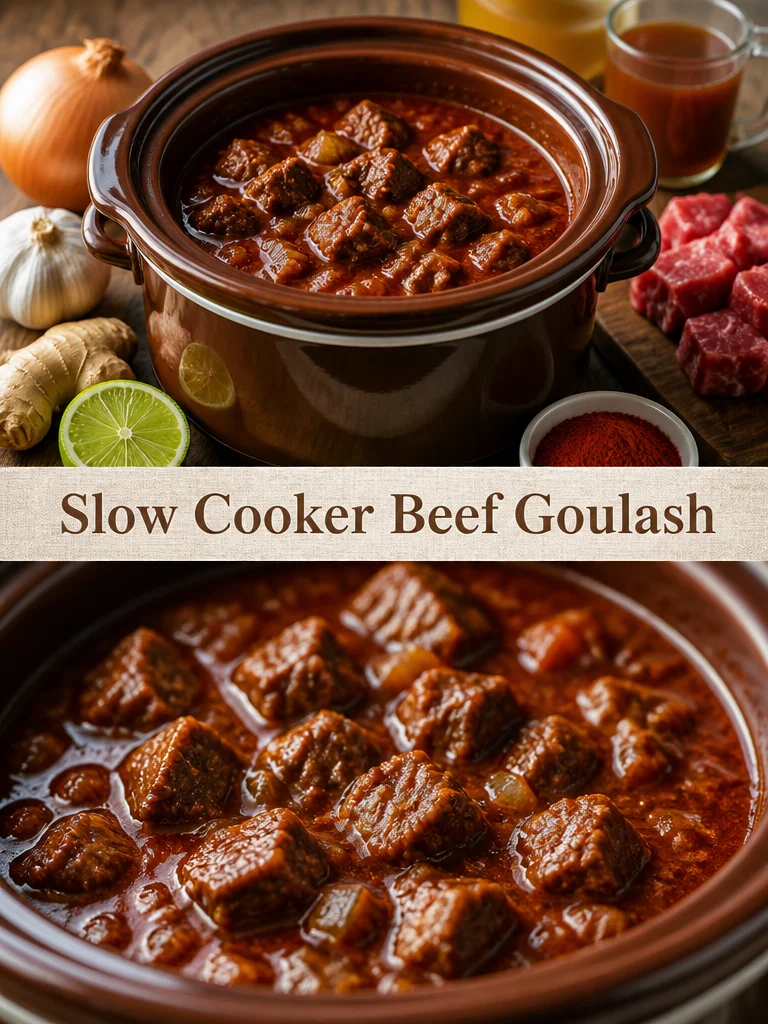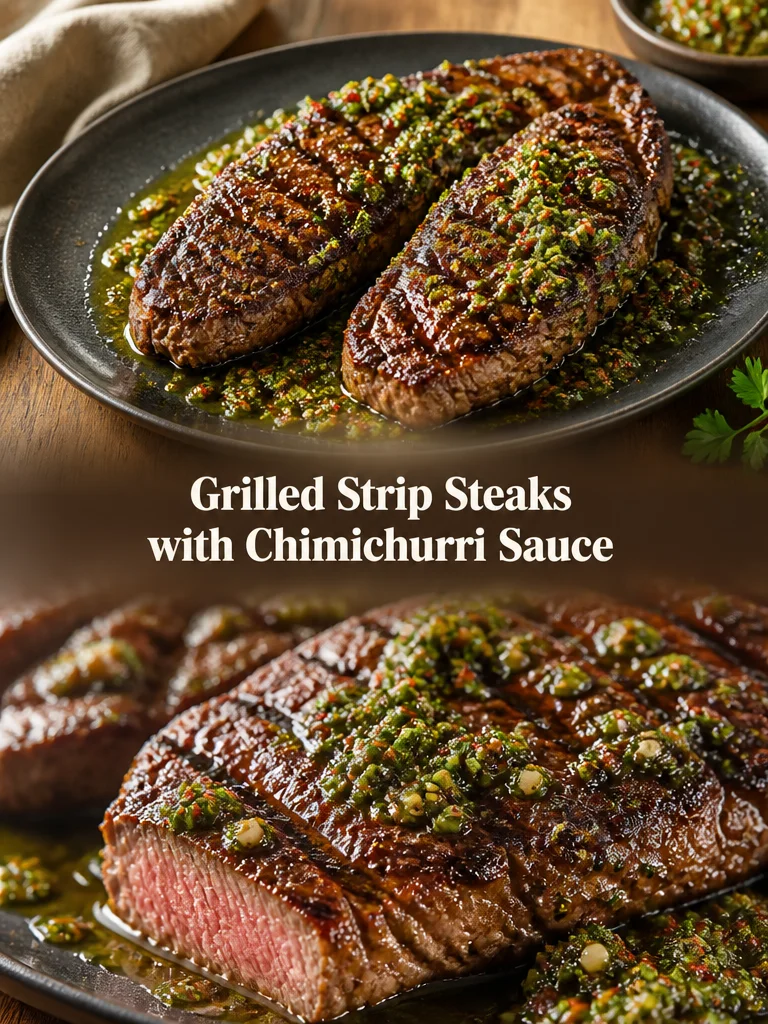
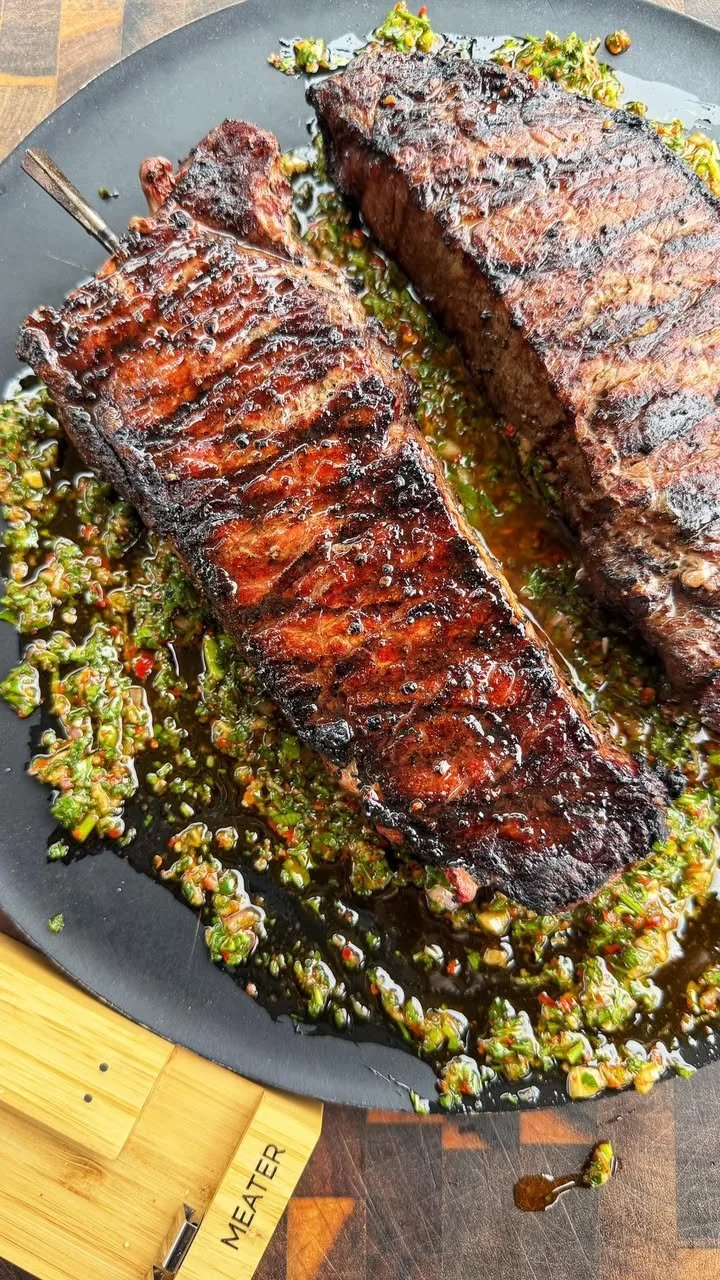
I still remember the first time I grilled strip steaks with a bright chimichurri spooned over the top — the char, the herb punch, and that little vinegar bite made a weeknight dinner feel celebratory. This recipe pairs simple, well-seasoned strip steaks with a classic Argentine-style chimichurri: fresh parsley and oregano, plenty of garlic, a splash of red wine vinegar, and olive oil. It’s fast, vibrant, and exactly the sort of dish you want when you want big flavor without fuss.
Why you’ll love this dish
This recipe delivers restaurant-worthy results with minimal effort. The strip steak gives you a tender, beefy centerpiece that crisps up nicely on a hot grill, while the chimichurri adds freshness, acidity, and heat to balance the richness. It’s great for:
- Weeknight dinners when you want something impressive but quick.
- Backyard grilling for friends or family — everyone loves the sizzle and char marks.
- Meal prep: make extra chimichurri to brighten sandwiches, roasted vegetables, or grilled fish later.
“The chimichurri turned a simple steak into my new go-to dinner. Bright, garlicky, and perfect with grilled crust.” — a quick kitchen review
The cooking process explained
In plain steps: you season and oil the steaks, sear them over high heat a few minutes per side to the desired doneness, then let them rest. While the meat rests, whisk the chimichurri together from fresh herbs, garlic, red wine vinegar, and olive oil. Spoon the sauce over the rested steaks and serve. This is a fast, two-part workflow — grill first, then finish with a raw, vibrant sauce.
{image_template}
Key ingredients
- 4 strip steaks (about 1–1½ inches thick is ideal; adjust cooking time for thicker cuts)
- Salt and freshly ground black pepper, to taste
- 2 tablespoons olive oil (for the steaks)
- 1 cup fresh parsley, finely chopped (flat-leaf preferred)
- 1/4 cup fresh oregano, chopped (or 2 tablespoons dried if fresh unavailable)
- 3 garlic cloves, minced (or 1–1½ teaspoons garlic paste)
- 1/2 teaspoon red pepper flakes (adjust to taste)
- 1/4 cup red wine vinegar (substitute: sherry vinegar or lemon juice for a brighter note)
- 1/2 cup olive oil (extra virgin for flavor)
Notes and substitutions:
- If you can’t find oregano, substitute fresh cilantro for a different green-herb profile (more Mexican/Argentinian fusion).
- For a lighter chimichurri, reduce olive oil slightly and add a splash of water or more vinegar.
- Use leaner or thicker cuts — just monitor internal temperature and cook times.
{image_2}
Step-by-step instructions
-
Prepare the steaks:
- Take steaks out of the fridge 20–30 minutes before grilling so they come closer to room temperature. Pat dry with paper towels.
- Season both sides generously with salt and pepper. Drizzle with the 2 tablespoons olive oil and rub to coat evenly.
-
Preheat the grill:
- Heat the grill to high (aim for 500–600°F / 260–315°C if you use a grill thermometer). Clean and oil the grates to prevent sticking.
-
Grill the steaks:
- Place steaks on the hot grill. For 1-inch thick strips, grill about 4–5 minutes per side for medium-rare (target internal temp 130–135°F / 54–57°C). Use a meat thermometer for accuracy.
- For rare: remove at 120–125°F; medium: 140–145°F. Times vary with thickness and grill heat.
-
Rest the steaks:
- Transfer steaks to a cutting board and tent loosely with foil. Rest 5–10 minutes — this lets juices redistribute and finish carryover cooking.
-
Make the chimichurri:
- While steaks rest, combine parsley, oregano, minced garlic, red pepper flakes, red wine vinegar, and 1/2 cup olive oil in a bowl. Stir until well mixed. Taste and adjust salt, pepper, or vinegar.
-
Serve:
- Slice the steaks against the grain if serving family-style, or serve whole. Spoon chimichurri over each steak or serve on the side.
Safety note: Refrigerate any leftovers within two hours. Always use a clean plate/tongs for cooked meat to avoid cross-contamination.
Best ways to enjoy it
- Plate with grilled lemon halves and a handful of flaky sea salt. The lemon brightens the chimichurri.
- Side pairings: roasted baby potatoes or a crisp simple salad (arugula, shaved fennel, lemon vinaigrette), charred corn, or grilled asparagus.
- Beverage pairings: medium-bodied red wine (Malbec, Tempranillo) or a citrusy lager. For non-alcoholic, sparkling water with a lime wedge refreshes the palate.
- For a sharing platter: thinly slice the steak, lay it across a board, drizzle chimichurri, and add crusty bread to soak up juices.
Storage and reheating tips
- Chimichurri: refrigerate in an airtight container for up to 4–5 days. The oil may solidify in cold temps — let sit at room temp to loosen before using. Freeze in ice cube trays for 1–3 months; thaw as needed.
- Cooked steak: refrigerate within two hours in an airtight container for 3–4 days.
- Reheating: gently reheat slices in a skillet over medium-low with a splash of beef stock or a quick pan-sear for best texture. Avoid microwaving if you want to preserve tenderness.
- Freezing steak: you can freeze cooked steak up to 2–3 months, but texture will change. Thaw overnight in the refrigerator before reheating.
Pro chef tips
- Use a thermometer. It removes guesswork and keeps steaks at the perfect doneness.
- Dry the steak before seasoning — moisture on the surface prevents a good sear.
- Don’t overcrowd the grill. Leave space between steaks so they sear instead of steam.
- Let the chimichurri sit at least 10–15 minutes after mixing if you have time; the flavors marry and mellow.
- Keep a little chimichurri aside for finishing — the leftover can be chopped finer and used as a bright garnish.
- Use tongs, not forks. Piercing the meat releases juices.
- If your grill tends to flare up, move steaks to a cooler part of the grill to finish cooking without charring.
Creative twists
- Spicy chimichurri: add 1 small jalapeño or 1 teaspoon smoked paprika.
- Citrus chimichurri: replace some vinegar with orange or lime juice for a fruitier note.
- Butter-brushed finish: after resting, brush steaks with compound butter (garlic + parsley) for extra richness.
- Alternate proteins: use the chimichurri on grilled chicken thighs, salmon fillets, or roasted portobello caps for a vegetarian option.
- Smoky variation: add 1 teaspoon smoked sea salt or use smoked paprika in the chimichurri for a campfire flavor.
{image_1}
Common questions
Q: How long does this take from start to finish?
A: Plan on about 35–45 minutes total. That includes 20–30 minutes for the steaks to come to room temp and about 10–15 minutes for grilling, resting, and making the chimichurri.
Q: Can I make chimichurri ahead of time?
A: Yes — chimichurri often tastes better after the flavors meld. Store in the refrigerator for up to 4–5 days or freeze in small portions for months. Bring to room temperature before serving.
Q: My steaks are thicker than 1 inch. How do I adjust grilling time?
A: For steaks 1½–2 inches thick, sear 4–6 minutes per side, then move to indirect heat or lower the grill to finish to desired internal temp. Use a thermometer to avoid overcooking.
Q: Is chimichurri safe to leave at room temperature during a meal?
A: Chimichurri made with oil and vinegar is relatively stable, but for long outdoor meals in hot weather, keep it chilled until serving and return leftovers to the fridge within two hours.
Q: Can I use dried herbs instead of fresh?
A: Fresh herbs give the bright flavor chimichurri needs. If you must use dried, use about one-third of the fresh herb quantity and taste as you go; texture will be different.
If you have questions about adjusting cook times for unusual cuts or adapting the chimichurri to dietary needs, tell me what you have on hand and I’ll suggest specific tweaks.