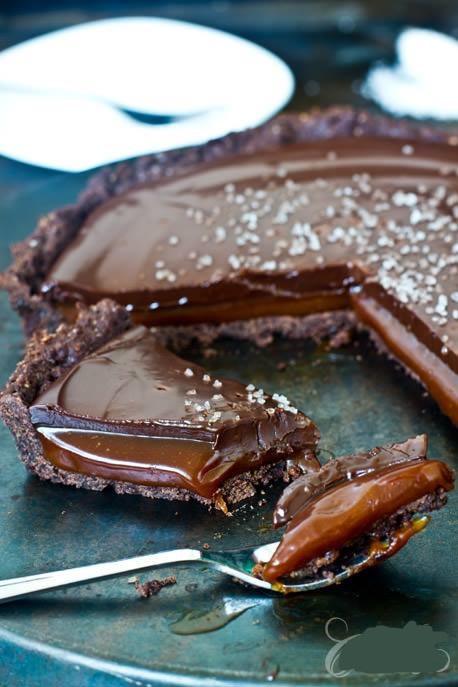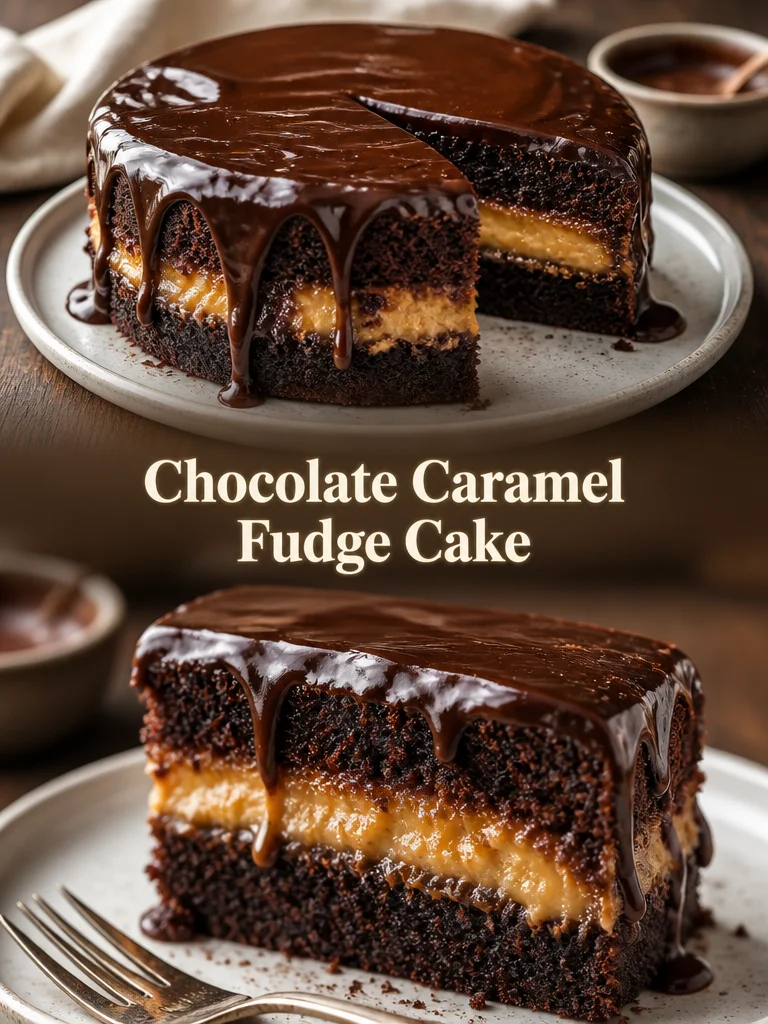
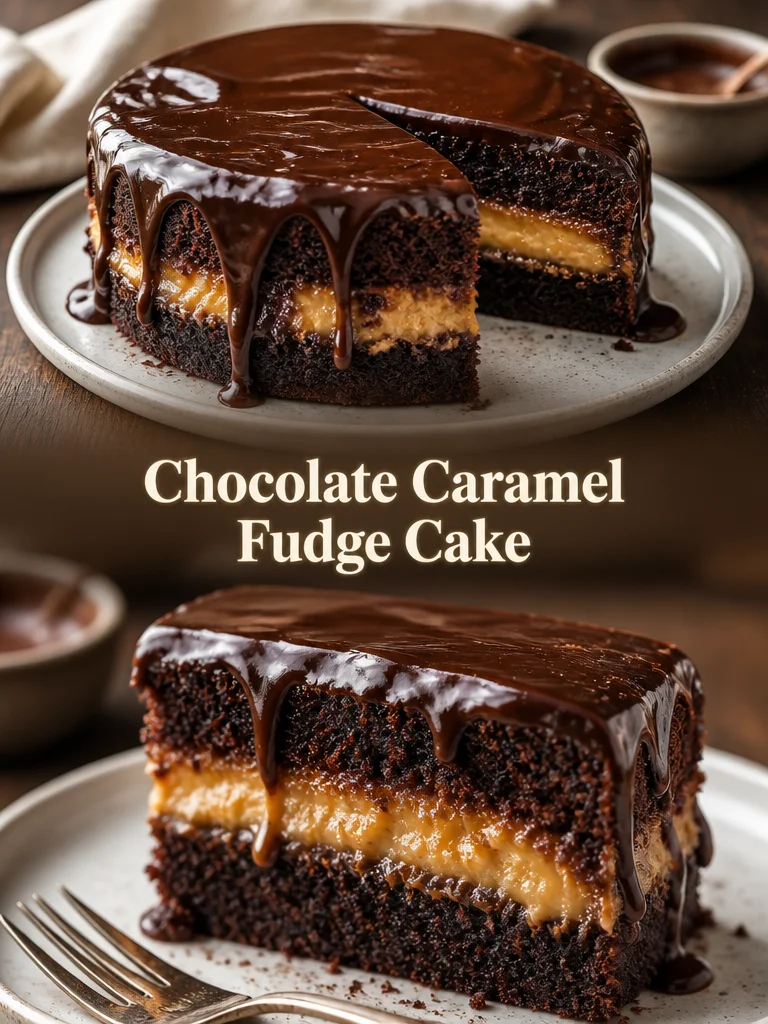
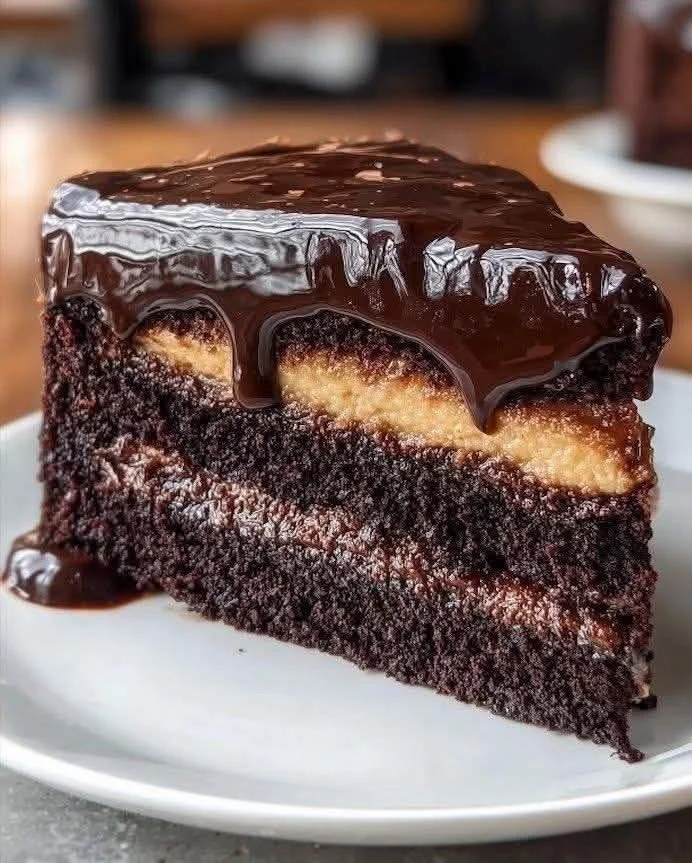
I still remember the first time I spooned warm caramel into a chocolate cake’s little holes and watched it sink in—those sticky ribbons changing a simple boxed-style crumb into something decadently fudgy. This Chocolate Caramel Fudge Cake is the sort of dessert people request for birthdays, potlucks, or when you want something that tastes fancy without a lot of drama. It’s fudgy, chocolatey, and finished with a buttery caramel that soaks into the cake for a molten, almost gooey center.
Why you’ll love this dish
This cake hits a few sweet spots: it’s quick to assemble, uses pantry staples, and gives a restaurant-style finish with minimal fuss. The hot water in the batter makes the crumb extra moist and tender, while the caramel poured warm soaks into the cake for a luscious texture contrast—crisp top, fudgy interior, and glossy caramel ribbons.
“The caramel turned a simple chocolate cake into the best dessert I’ve baked all year—comforting, rich, and perfectly balanced.”
It’s ideal for casual celebrations, weekend baking projects, and anyone who likes their chocolate with a salted-butter kick. Families love it because it’s kid-friendly, and home bakers appreciate the forgiving method.
How this recipe comes together
Quick overview before we list ingredients so you know what’s involved: mix the dry ingredients, whisk in eggs, milk (or buttermilk), oil and vanilla, then stir in hot water for a thin batter. Bake until set. Meanwhile, make a simple stovetop caramel (watch closely—hot sugar is unforgiving). Poke holes in the slightly warm cake, pour half the caramel to soak in, wait, then drizzle the rest on top. Total hands-on time is about 25–30 minutes; baking plus soak time brings it to roughly 1 hour.
{image_template}
Gather these items
- 1 3⁄4 cups (220 g) all-purpose flour
- 3⁄4 cup (75 g) unsweetened cocoa powder
- 1 1⁄2 cups (300 g) granulated sugar (for the cake)
- 2 teaspoons baking powder
- 1 teaspoon baking soda
- 1⁄2 teaspoon salt
- 2 eggs, at room temperature
- 1 cup (240 ml) milk or buttermilk (buttermilk makes it slightly tangier and more tender)
- 1⁄2 cup (120 ml) vegetable oil (neutral oil like sunflower or canola)
- 2 teaspoons vanilla extract
- 1 cup (240 ml) hot water (hot — not boiling — or very hot tap water)
Caramel sauce:
- 1 cup (200 g) granulated sugar (for caramel)
- 100 g butter (unsalted or salted; if using unsalted add a pinch more salt to sauce)
- 1⁄2 cup (120 ml) heavy cream, warmed (warming helps prevent the caramel from seizing)
- 1 pinch salt (for caramel; more to taste)
Notes/substitutions:
- For dairy-free: use plant-based milk and coconut cream instead of heavy cream; caramel flavor will be slightly different.
- For richer chocolate flavor, use Dutch-process cocoa but reduce baking powder to 1½ teaspoons and add ¼ teaspoon baking soda only if needed (this recipe as written works well with natural cocoa).
How to prepare it
- Preheat the oven to 180°C (350°F). Grease and line an 8- or 9-inch (20–23 cm) round or square pan with parchment.
- In a large bowl whisk together flour, cocoa powder, 1 1⁄2 cups sugar, baking powder, baking soda, and 1⁄2 teaspoon salt until evenly mixed.
- Add the eggs, milk (or buttermilk), vegetable oil, and vanilla. Whisk until smooth and no streaks of flour remain. The batter will be thick at this point.
- Pour in the hot water and stir gently until fully combined. The batter will become thin and glossy—that’s normal and produces a moist crumb.
- Pour the batter into your prepared pan and smooth the top.
- Bake 30–35 minutes at 180°C (350°F), or until a toothpick inserted near the center comes out with a few moist crumbs (not raw batter). Ovens vary—start checking at 28 minutes.
- Let the cake cool in the pan for about 10–15 minutes. Then turn it out onto a rack so you can poke holes and pour caramel.
Make the caramel sauce:
8. In a medium heavy-bottomed saucepan, melt 1 cup (200 g) sugar over low–medium heat. Swirl the pan gently (do not stir vigorously) as the sugar melts and turns amber. Watch closely—the color can go from perfect to burnt fast.
9. When the sugar is amber and fully melted, reduce heat slightly and add the 100 g butter. Stir until incorporated—be careful, it will bubble.
10. Slowly pour in the warmed 1⁄2 cup (120 ml) heavy cream while stirring. Add a pinch of salt and continue stirring until the sauce is smooth. Remove from heat. If the caramel firms, keep stirring; warming slightly will loosen it.
Finish the cake:
11. When the cake is still slightly warm (cool enough to handle but warm to touch), poke holes all over the top with a toothpick or skewer—make them frequent but not too wide.
12. Pour half of the warm caramel over the cake, letting it sink into the holes. Wait about 20 minutes for the caramel to absorb.
13. Drizzle the remaining caramel over the top just before serving for glossy presentation.
Tips in-line while you bake:
- Always warm the cream before adding to hot sugar to reduce spattering and seizing.
- Use an oven thermometer if your oven runs hot or cool—doneness matters for texture.
- If your caramel hardens or “sets” while you’re working, gently rewarm it over low heat or in short bursts in the microwave.
Best ways to enjoy it
Serve slices warm or at room temperature. A scoop of vanilla ice cream or a dollop of whipped cream balances the richness. For a grown-up twist, drizzle with a little espresso or serve with a salted caramel ice cream. For presentation, dust with cocoa or flaky sea salt on top of the caramel right before serving to highlight the sweet–salty contrast.
Pairing ideas:
- Coffee or espresso for bitter contrast.
- Port or tawny-style dessert wine for an indulgent pairing.
- Fresh berries to cut through the richness.
How to store & freeze
Short-term: Store leftovers covered at room temperature for up to 24 hours if your kitchen is cool. Because of the caramel and cream, refrigeration is safer for longer storage—cover the cake tightly and refrigerate up to 3–4 days.
Caramel sauce: keep it in an airtight jar in the fridge for up to 10–14 days. Rewarm gently before using.
Freezing: Wrap individual slices tightly in plastic wrap and then foil; freeze up to 2–3 months. Thaw in the refrigerator overnight and rewarm in a low oven (150°C / 300°F) for 10–12 minutes or microwave in short bursts.
Safety note: Caramel is extremely hot. Use caution—don’t taste or touch while still cooking, and keep children away during the caramel step.
Pro chef tips
- Room-temperature eggs help create a smoother emulsion so the batter mixes evenly.
- Use a dark or nonstick pan for slightly better browning, but lower the oven by 5–10°C if your oven runs hot.
- If you prefer a less sweet finish, reduce the caramel poured over the cake by 25% or use salted butter to contrast.
- For an ultra-fudge interior, slightly underbake by a couple of minutes—look for a cake that’s set at the edges but a touch softer in the center.
- If your caramel seizes (becomes grainy) when adding cream, keep stirring off heat and warm gently; sometimes a teaspoon of water can help dissolve crystallized sugar, but proceed carefully.
Flavor swaps
- Salted Chocolate Caramel: Use salted butter in the caramel and sprinkle flaky sea salt on top.
- Nutty Crunch: Fold chopped toasted pecans or hazelnuts into the caramel before pouring half into the cake.
- Boozy Boost: Stir 1–2 tablespoons of bourbon, rum, or dark rum into the warm caramel off the heat for depth.
- Gluten-free: Substitute a 1:1 gluten-free flour blend that contains xanthan gum; texture will vary slightly.
- Lighter version: Use whole milk instead of heavy cream in the caramel and swap oil for light olive oil—results will be less rich but still tasty.
Your questions answered
Q: How long does this take from start to finish?
A: About 15–25 minutes prep, 30–35 minutes baking, plus 20 minutes for the caramel soak—plan roughly 1 hour total.
Q: Can I make the caramel ahead of time?
A: Yes. Make it ahead, cool, and refrigerate in a jar for up to 10–14 days. Rewarm gently before pouring over the cake.
Q: My sugar crystallized while making caramel—what now?
A: If crystals form on the pan sides, wash the sides with a wet pastry brush while the sugar melts, or add a splash of water and heat gently to dissolve crystals. If the caramel becomes grainy after adding cream, keep stirring off heat and warm slightly on low until it smooths. Prevention is easier: don’t stir aggressively while the sugar melts and warm the cream before adding.
Q: Can I use a bundt pan or loaf pan instead of round/square?
A: Yes. Baking time may change—a bundt may take 40–50 minutes; use a skewer to test doneness and tent with foil if the top browns too quickly.
Q: Is this safe to leave at room temperature?
A: Because the caramel contains cream, refrigerate any leftovers after a couple of hours at room temperature. For short serving windows (party or gathering), keep it covered and finish within 2 hours.
If you want, I can convert measurements to cups-only or scale the recipe up/down for a larger crowd — tell me how many people you’re feeding.