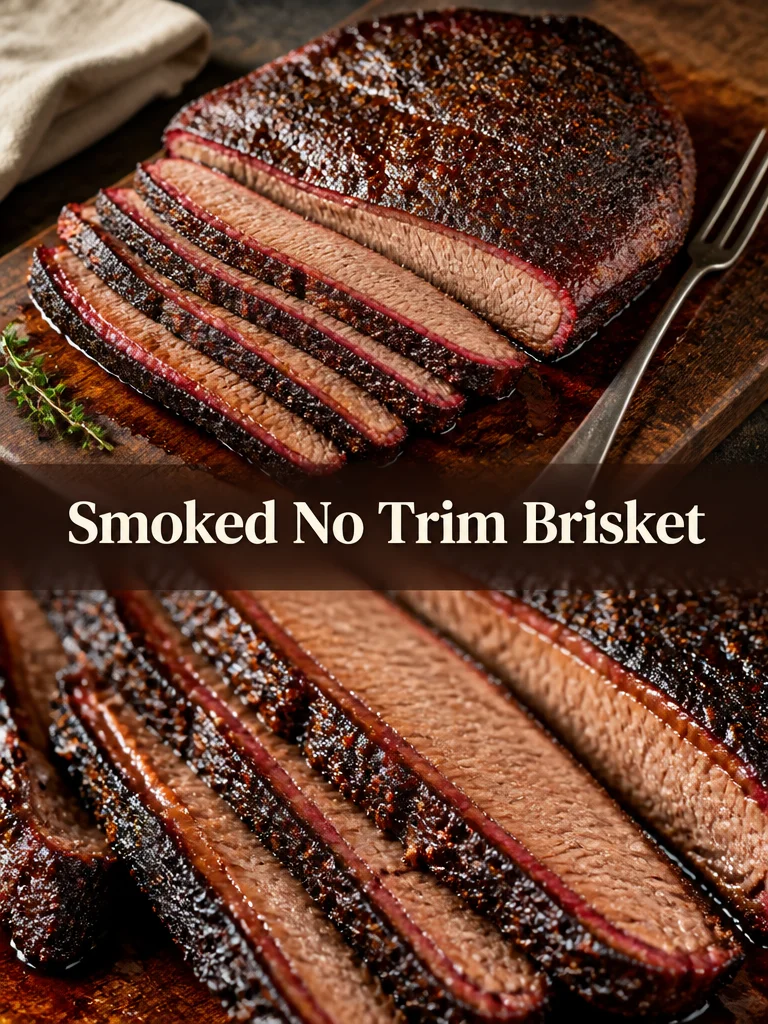
I still remember the first time I smoked a whole brisket and left the fat cap largely intact — the bark developed into a crisp, peppery crust while the interior stayed impossibly juicy. This Smoked No Trim Brisket recipe leans into that old-school barbecue approach: simple seasonings, low-and-slow smoke, and patience. It’s perfect for backyard weekend cookouts, holiday gatherings, or any time you want a slab of beef that feeds a crowd and tastes like Sunday at the pitmaster’s table.
Why you’ll love this dish
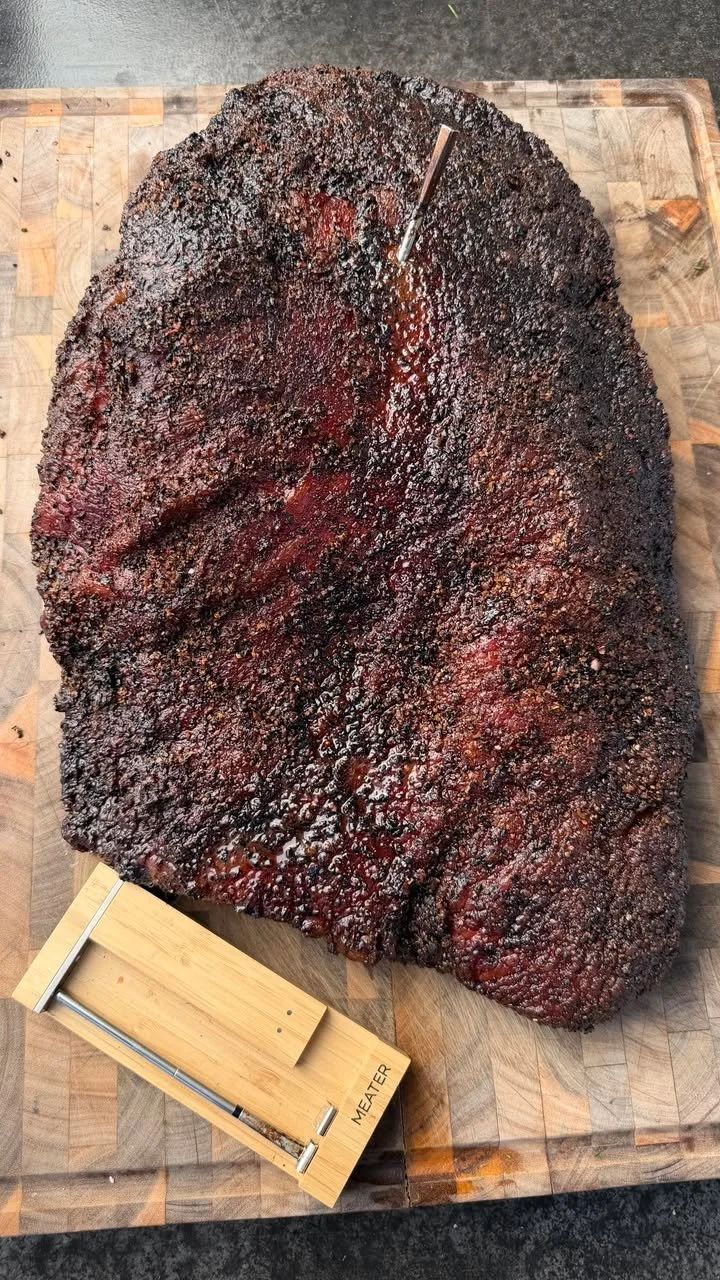
This recipe is all about straightforward smoke-forward flavor and minimal prep. With just four dry seasonings and a good wood smoke, the brisket builds a deep, savory crust (the bark) while the fat cap protects the meat during the long cook. Leave the brisket mostly untrimmed for more flavor and moisture — ideal if you like rich mouthfeel and want less fuss before the smoker.
- Crowd-pleasing and economical: a single whole brisket feeds many.
- Minimal ingredient list: salt, pepper, garlic and onion powder highlight the beef.
- Flexible timing: low-and-slow lets you plan around events.
“Left the fat on, kept the rub simple, and the smoker did the rest — best brisket I’ve made at home.”
How this recipe comes together
Think of the process in three clear phases: season, smoke, rest. First, you liberally season the whole packer brisket and let the rub adhere. Then you place it in a smoker set to 225°F (107°C) and maintain steady smoke using hickory or oak chunks. During the cook you’ll watch for the stall and let the meat gradually climb to a target internal temperature of 195–205°F (90–96°C). Finally, you wrap in butcher paper and rest — that rest is when the juices redistribute and the meat finishes gently.
High-level timeline:
- Prep and seasoning: 10–20 minutes
- Smoking: ~1 to 1.5 hours per pound at 225°F (107°C)
- Rest: 30 minutes (or longer if kept warm wrapped)
{image_template}
Gather these items
- 1 whole brisket (packer / flat + point), 5–10 lbs
- Kosher salt (coarse)
- Freshly ground black pepper (coarse)
- Garlic powder
- Onion powder
- Smoked wood chunks (hickory or oak recommended; fruit woods like apple/cherry are good if you want a milder smoke)
Notes and substitutions:
- Kosher salt is preferred for even coverage; if using table salt, use less (about half).
- For a classic Texas-style rub, use roughly a 50/50 ratio by volume of kosher salt to coarse black pepper, then add modest pinches of garlic and onion powder.
- If you only have chips or pellets, they will work — maintain smoke consistency.
{image_2}
Directions to follow
- Preheat your smoker to a steady 225°F (107°C). Stabilize the temperature before adding meat.
- Trim very large, hard fat deposits if desired — but for “no trim” leave the fat cap mostly intact (trim excess so it’s no thicker than 1/4–1/2 inch in places). Leaving fat on helps keep the meat moist during the long cook.
- Pat the brisket dry with paper towels. Generously season all sides with kosher salt, coarse black pepper, garlic powder, and onion powder. Press the rub in so it adheres.
- Place the brisket in the smoker fat side up. This protects the meat and lets rendered fat baste the brisket as it cooks.
- Add wood chunks (hickory or oak) to your firebox or on the coals. Aim for a clean, thin smoke — white/blue rather than thick gray smoke.
- Smoke until the internal temperature reaches 195–205°F (90–96°C). Expect roughly 1 to 1.5 hours per pound at 225°F (107°C). The brisket will hit a stall around 150–170°F; patience or wrapping (see tip below) will get you through it.
- Optional: when the brisket reaches about 150–165°F and the stall becomes long, wrap tightly in butcher paper (preferred over foil for better bark) to speed through the stall and retain moisture.
- Once the target temperature is reached and the probe slides in with little resistance, remove the brisket. Wrap in fresh butcher paper (or foil) and let rest for at least 30 minutes. For larger briskets, a 1–2 hour rest in a cooler keeps it warm and improves texture.
- Slice against the grain into 1/4-inch–to–1/2-inch slices for best tenderness. Serve and enjoy.
What to serve it with
- Classic pairings: potato salad, coleslaw, baked beans, pickles, and white bread or rolls.
- Sauces: serve with a simple vinegar-based sauce, a tangy mustard sauce, or no sauce at all to appreciate the bark.
- Creative plating: brisket tacos with pickled red onion and cilantro, or a chopped brisket sandwich with pickles and a slaw for crunch.
- Beverage pairings: a full-bodied beer, bold red wine (Zinfandel or Syrah), or a sweet iced tea for balance.
How to store & freeze
- Refrigerate cooked brisket within 2 hours of the end of the cook. Store in an airtight container or wrapped tightly in foil.
- Refrigerated brisket lasts 3–4 days. Reheat gently (see tips below).
- To freeze: portion into meal-sized packs, wrap tightly in plastic wrap, then aluminum foil or vacuum-seal. Label with date. Frozen brisket keeps well for 2–3 months for best quality.
- Reheat safely to 165°F (74°C) if you’re reheating for service; for tenderness aim to reheat slowly to 140°F (60°C) and serve.
Pro chef tips
- Use a reliable probe thermometer and place the probe in the thickest part of the flat without touching fat or bone. Temperature, not time, tells the truth.
- Coarse grind black pepper produces a classic peppery bark. Freshly cracked pepper works best.
- If the brisket stalls and you’re short on time, wrap in butcher paper (the “Texas crutch”) around 150–165°F to push through the stall while keeping some bark integrity. Foil retains slightly more moisture but softens bark more.
- Let it rest long. A good 30–60 minute rest wrapped in butcher paper or in a cooler with towels makes slicing neater and the slices juicier.
- Slice against the grain — the grain direction can change between the flat and point, so check before cutting.
- Keep a water pan in the smoker to promote a humid environment and reduce moisture loss.
Creative twists
- Coffee-rub brisket: add a tablespoon of finely ground coffee to the rub for an earthy note.
- Sweet and spicy: mix a touch of brown sugar and smoked paprika into the rub for a caramelized edge.
- Asian-inspired brisket: finish slices with a soy-sesame glaze and serve over steamed rice with scallions.
- Low-sodium option: reduce salt, but boost flavor with umami additions like mushroom powder or smoked paprika.
- Pellet grill conversion: use the same temps and internal temp targets; set pellets to 225°F and add a chunk or two of real wood for extra smoke flavor.
{image_1}
Your questions answered
Q: How long should I expect this brisket to take?
A: Plan on about 1 to 1.5 hours per pound at 225°F (107°C). A 7 lb brisket commonly takes 7–10 hours. Always cook to internal temperature and probe tenderness rather than relying solely on time.
Q: Do I really need to trim the brisket?
A: “No trim” means you can leave most of the fat cap intact. Trim only very thick pockets over 1/2 inch that won’t render well. A thin even fat cap helps keep the meat moist and adds flavor.
Q: When should I wrap the brisket?
A: Wrapping is optional. If you encounter a long stall (150–170°F) and need to speed things up or retain juices, wrap in butcher paper around that range. For a firmer bark, wait until the brisket has developed a good crust before wrapping or don’t wrap at all.
Q: How do I know the brisket is done besides temperature?
A: Done is both temperature and feel: 195–205°F (90–96°C) is the range where connective tissue has melted. A probe should slide in with little resistance (like warm butter). If the temperature is reached but the probe is still “sticky,” give it more time.
Q: Can I use a pellet grill, charcoal, or gas smoker?
A: Yes. All can produce great results. Maintain a steady 225°F and introduce hardwood smoke (chunks or a smoke tube) for best flavor on gas/pellet setups.
Q: How should I reheat leftover brisket without drying it out?
A: Reheat slowly: wrap slices in foil with a splash of beef broth and bake at 250°F until warmed through, or reheat sous-vide at 140°F for about an hour. Avoid high heat that will dry the meat.
If you want, I can also provide a printable timing chart based on brisket weight, or a simple shopping checklist tailored to your smoker type. Which would help you most?