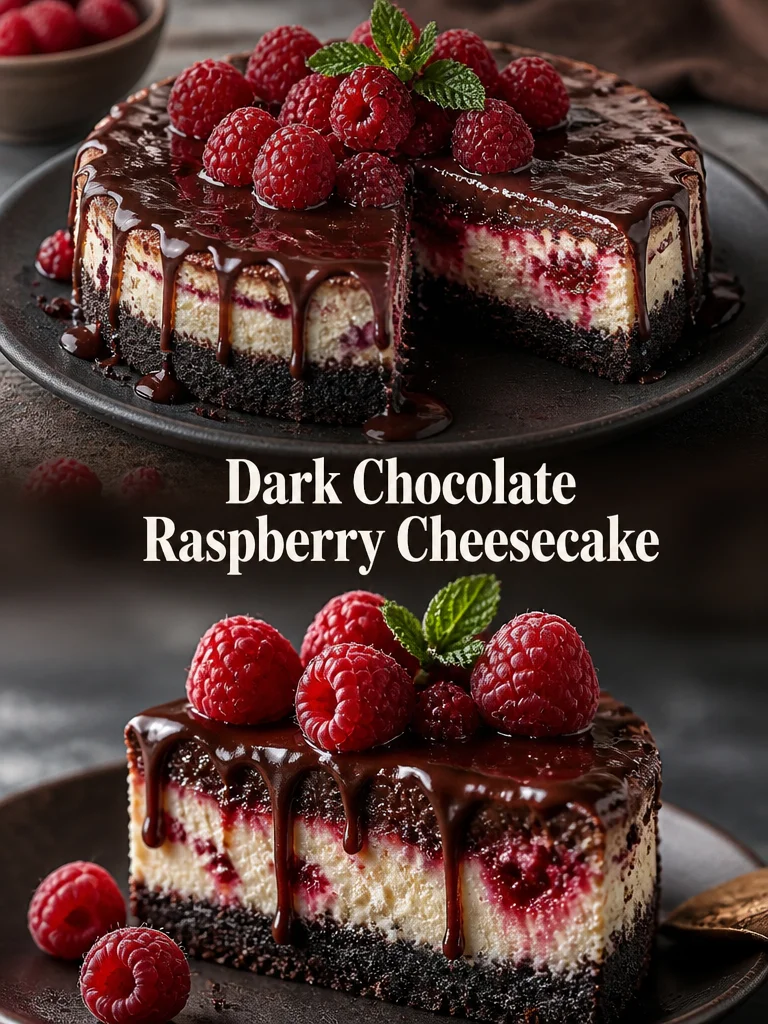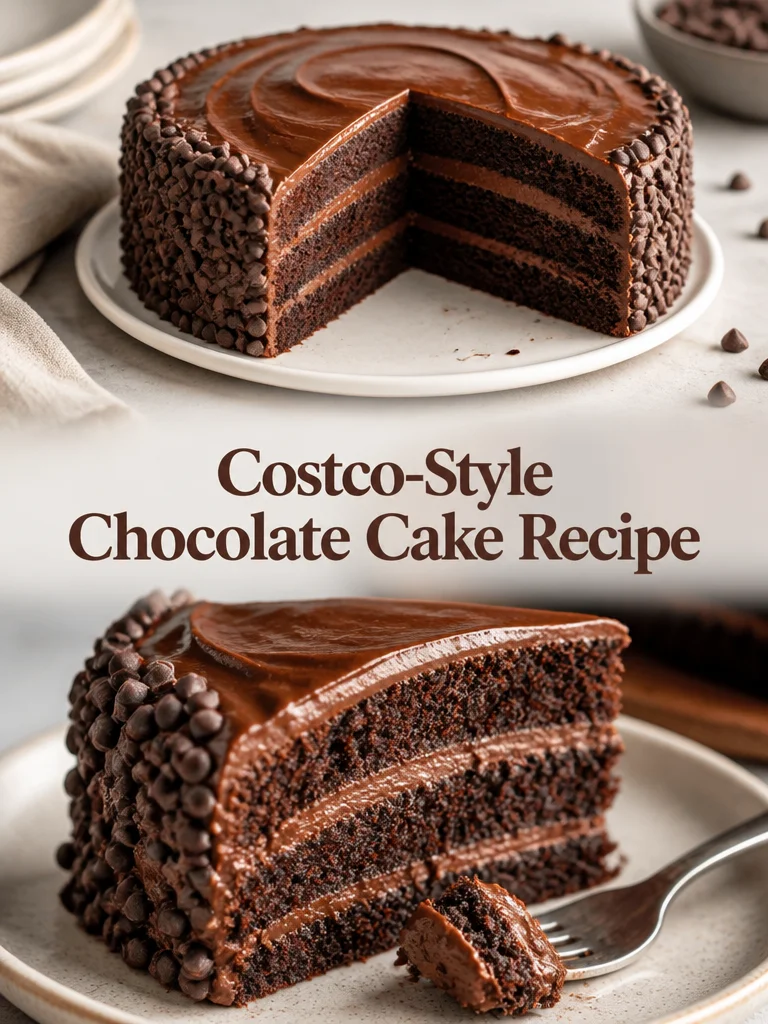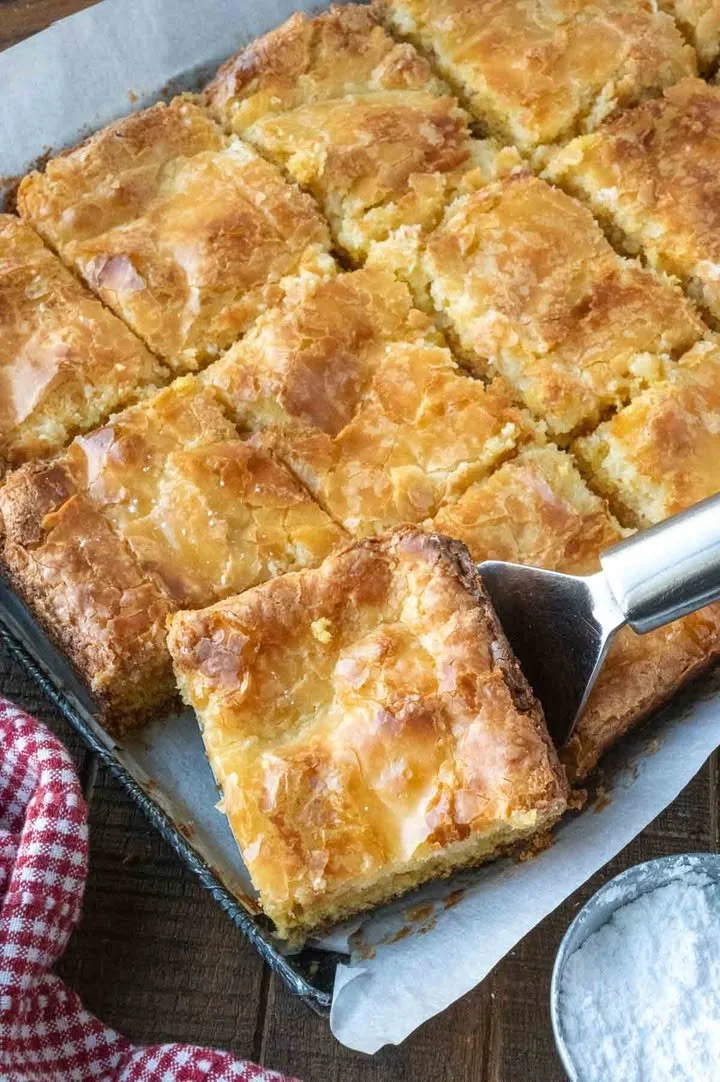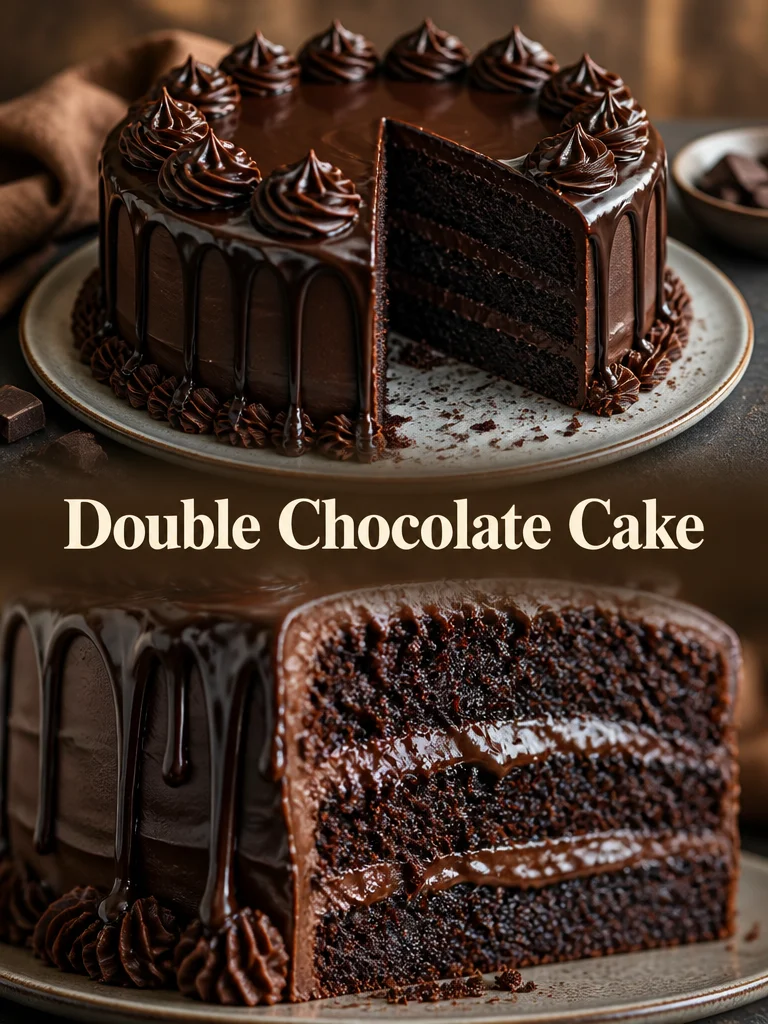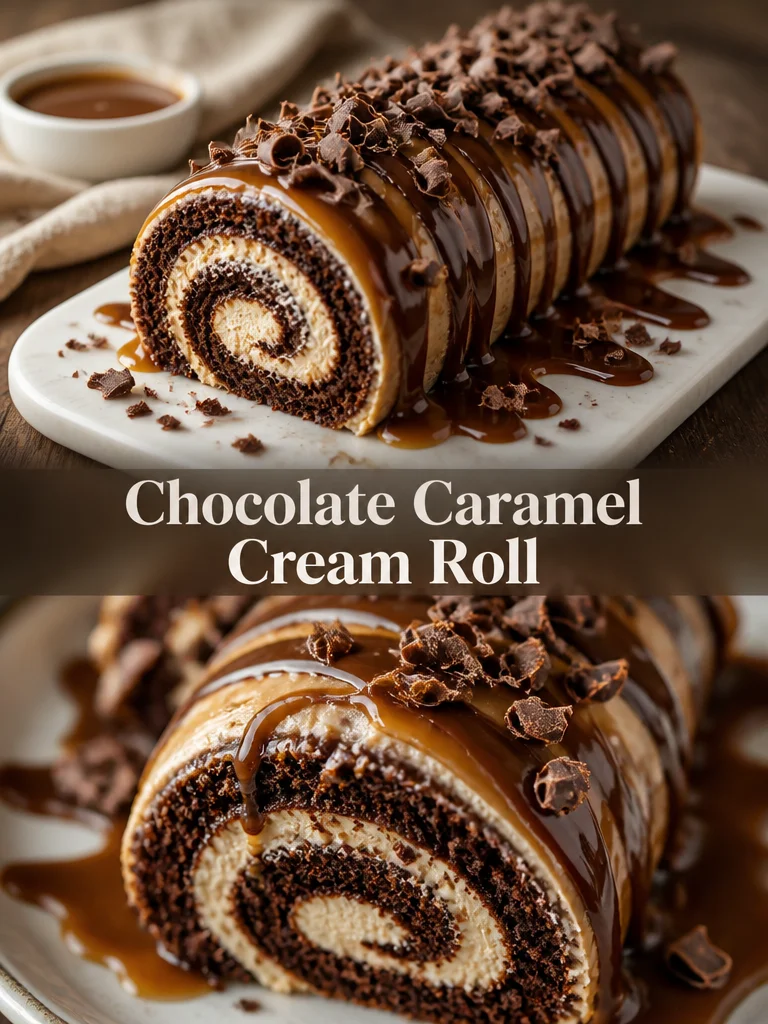
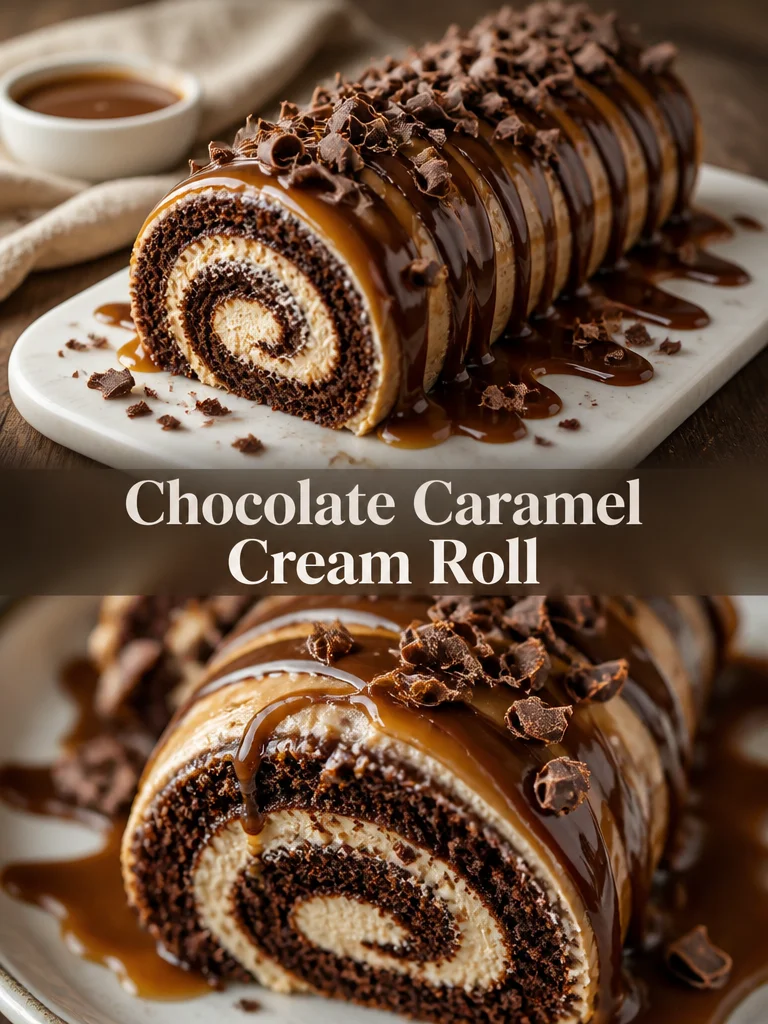
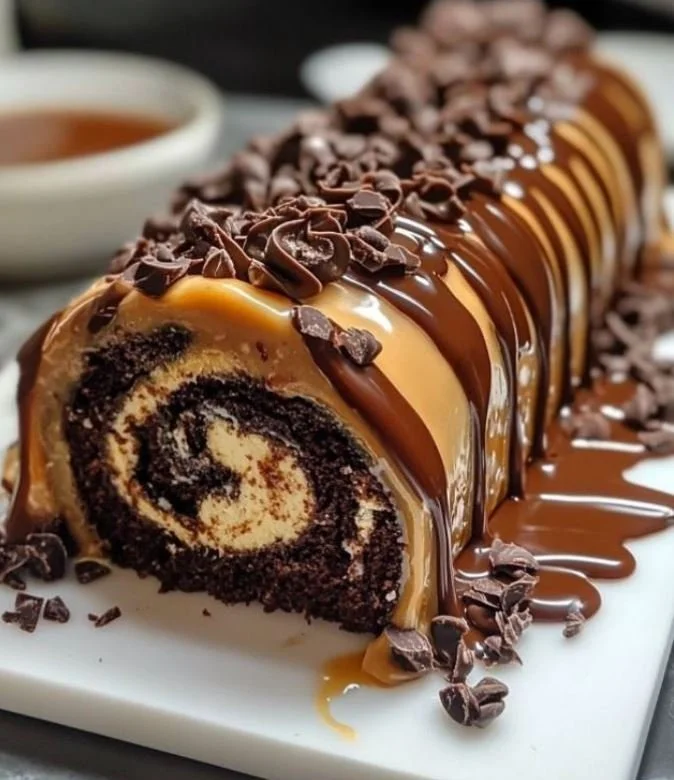
I remember the first time I rolled this Chocolate Caramel Cream Roll — the oven filled with a warm cocoa scent, and the thin sponge felt impossibly delicate as I flipped it onto the towel. It’s an elegant, show-stopping dessert that looks like it belongs at a dinner party but comes together from pantry-friendly ingredients. The combination of a light chocolate sponge, a ribbon of caramel, and cloud-like whipped cream makes each slice rich but airy — perfect for celebrations, weekend baking, or as a make-ahead dessert for guests.
What makes this recipe special
This roll is a clever balance of texture and flavor: a thin, egg-forward chocolate sponge that’s tender and flexible, layered with sweet caramel and stabilized whipped cream. It’s quick to mix, needs only a few components, and the finished presentation looks far fancier than the effort involved.
- Low-ingredient, high-impact dessert.
- No flour means the structure comes from whipped eggs, giving a very tender crumb.
- Ideal for entertaining because you can assemble it ahead and chill.
“I made this for a holiday brunch and everyone insisted on the recipe — silky cream, just the right caramel hit, and not overly dense. A weekday-bake that feels special.” — home baker review
The cooking process explained
Quick overview so you know what to expect: you’ll whip whole eggs and granulated sugar until pale and voluminous, sift cocoa into the aerated mixture, fold gently, and bake the batter as a thin sheet. While the cake cools briefly, you’ll whip heavy cream with powdered sugar and vanilla to soft peaks. After dusting a towel with powdered sugar, invert the warm cake onto it to prevent sticking, spread caramel, add the whipped cream, and roll gently to build the spiral. Chill to set, then slice.
{image_template}
Gather these items
- 4 eggs (room temperature — this helps achieve maximum volume)
- 3/4 cup granulated sugar
- 1/4 cup unsweetened cocoa powder (sifted to avoid lumps)
- 1 cup heavy cream (cold)
- 1/2 cup caramel sauce (store-bought or homemade)
- 1 tsp vanilla extract
- 1/4 cup powdered sugar (for whipping and dusting the towel)
Notes and substitutions:
- Caramel: salted caramel gives a nice contrast; use store-bought for speed or make a simple stovetop caramel if you prefer control.
- Heavy cream: for more stability, fold in 2–3 tbsp mascarpone or use a stabilized whipped cream method (see tips).
- Cocoa: Dutch-processed will give a deeper chocolate flavor; adjust sweetness if using intensely chocolatey cocoa.
- If you want a slightly firmer sponge for rolling, you can add 2 tablespoons of all-purpose flour — though this changes the texture away from the very eggy version.
Directions to follow
- Preheat the oven to 375°F (190°C). Line a rimmed baking sheet (about 10×15 inches) with parchment paper; trim if necessary so it lies flat.
- In a large bowl, beat the 4 eggs with 3/4 cup granulated sugar. Use a stand or hand mixer on medium-high until the mixture is thick, pale, and ribbon-like when the whisk is lifted (about 5–8 minutes).
- Sift the 1/4 cup cocoa powder over the whipped eggs. Fold gently with a spatula in several additions to keep the batter airy and avoid deflating.
- Spread the batter evenly on the prepared baking sheet, smoothing to the edges so the layer is uniform.
- Bake 15–20 minutes. The cake is done when it springs back lightly to the touch and a toothpick comes out mostly clean — avoid overbaking, which makes rolling harder.
- Remove from oven. Let the cake cool for 1–2 minutes, then immediately invert it onto a clean kitchen towel generously dusted with the 1/4 cup powdered sugar. Peel off the parchment.
- While the cake cools on the towel, whip the 1 cup cold heavy cream with 1/4 cup powdered sugar and 1 tsp vanilla extract until soft peaks form.
- Spread 1/2 cup caramel sauce in a thin, even layer over the cake, leaving a small border. Then spread the whipped cream over the caramel.
- Using the towel to guide you, roll the cake gently from the short side into a tight log. Transfer seam-side down to a plate or pan, wrap loosely with plastic, and refrigerate at least 1 hour to set before slicing. Chill makes cleaner slices.
Best ways to enjoy it
- Slice into 1-inch rounds and serve on a dessert plate with a dusting of cocoa or powdered sugar.
- Drizzle extra warm caramel over each slice and finish with flaky sea salt for contrast.
- Pair with fresh raspberries, salted caramel ice cream, or a small espresso for balance.
- For presentation, pipe a few rosettes of whipped cream down the center of each slice and sprinkle chopped toasted hazelnuts.
How to store & freeze
- Refrigeration: Keep wrapped in plastic or in an airtight container for up to 3 days. The roll is best chilled and slightly firm for neat slices.
- Freezing: Wrap the whole roll tightly in plastic wrap, then aluminum foil. Freeze up to 1 month. Thaw overnight in the refrigerator before serving.
- Food safety: Because the sponge is fully baked, it’s safe to store refrigerated. Keep at or below 40°F (4°C).
Pro chef tips
- Room-temperature eggs whip better. Take eggs out of the fridge 20–30 minutes before you start.
- Beat the eggs and sugar until they’re pale, thick, and doubled in volume — this is the structure of the sponge. Under-mixed batter yields a dense cake; over-mixing after adding cocoa deflates it.
- Folding: Use a wide spatula; cut through the center, lift and fold from the edge. Rotate the bowl as you fold to combine without losing air.
- Prevent cracking by rolling the cake while it’s still warm (but not piping-hot) and using the towel to help maintain shape. If cracks appear later, hide them with a ribbon of extra caramel or dusting.
- Stabilize whipped cream: add 1 tsp powdered gelatin (bloomed and melted) or 2–3 tbsp mascarpone for longer hold if you need the roll to sit out for events.
- Use an offset spatula to spread caramel as a thin, even layer — too much caramel makes the roll soggy.
Creative twists
- Mocha: fold 1 tsp instant espresso into the cocoa for a coffee-kissed sponge.
- Citrus-chocolate: add 1 tsp orange zest to the whipped cream for brightness and swap salted caramel for orange marmalade.
- Berry swirl: spread a thin layer of raspberry jam between cake and cream before rolling.
- Nutella or peanut butter: replace caramel with a thin layer of Nutella or peanut butter mixture for a different flavor profile.
- Dairy-free: use full-fat coconut cream whipped with powdered sugar and a non-dairy caramel alternative for a vegan-friendly version.
- Boozy option: fold 1–2 tbsp of rum or coffee liqueur into the whipped cream for adults-only servings.
Your questions answered
Q: How long does it take to prep and make this roll?
A: Active prep is about 25–35 minutes (mixing and baking included). Chilling for at least 1 hour is recommended, so plan for about 1.5–2 hours total before serving.
Q: Can I make the sponge in advance?
A: Yes. Bake the sponge up to 1 day ahead, wrap in plastic, and refrigerate. When ready, invert, fill, and roll. For best flexibility, you can roll it loosely in the towel and rewrap to preserve the shape.
Q: Why did my cake crack when I rolled it?
A: Common causes are overbaking (dry cake), cooling too long before the first roll (loses flexibility), or not rolling while warm. Ensure you roll while the sponge is still pliable, and if it’s slightly cracked, the whipped cream and caramel will often disguise imperfections.
Q: Is the caramel likely to make the roll soggy?
A: If you spread a thin layer of caramel and work quickly, sogginess is minimal. Avoid pouring warm, runny caramel directly on the cake — let it cool to a spreadable consistency. You can also put a thin barrier of jam or a very thin layer of whipped cream first to reduce direct moisture transfer.
Q: Can I freeze individual slices?
A: Yes, wrap slices tightly and freeze for up to a month. Thaw in the fridge overnight. Note: texture of whipped cream changes slightly after freezing; stabilized cream holds up better.
Q: Are there safety concerns with the eggs in the sponge?
A: The recipe bakes the whole egg mixture, so the eggs are cooked. Ensure the sponge reaches the recommended temperature and appears springy. If you need to minimize risk further, use pasteurized eggs.
If you’d like, I can write a printable recipe card version of this Chocolate Caramel Cream Roll or suggest a gluten-free or stabilized-cream variation with exact measurements and timings. Which would help you most?